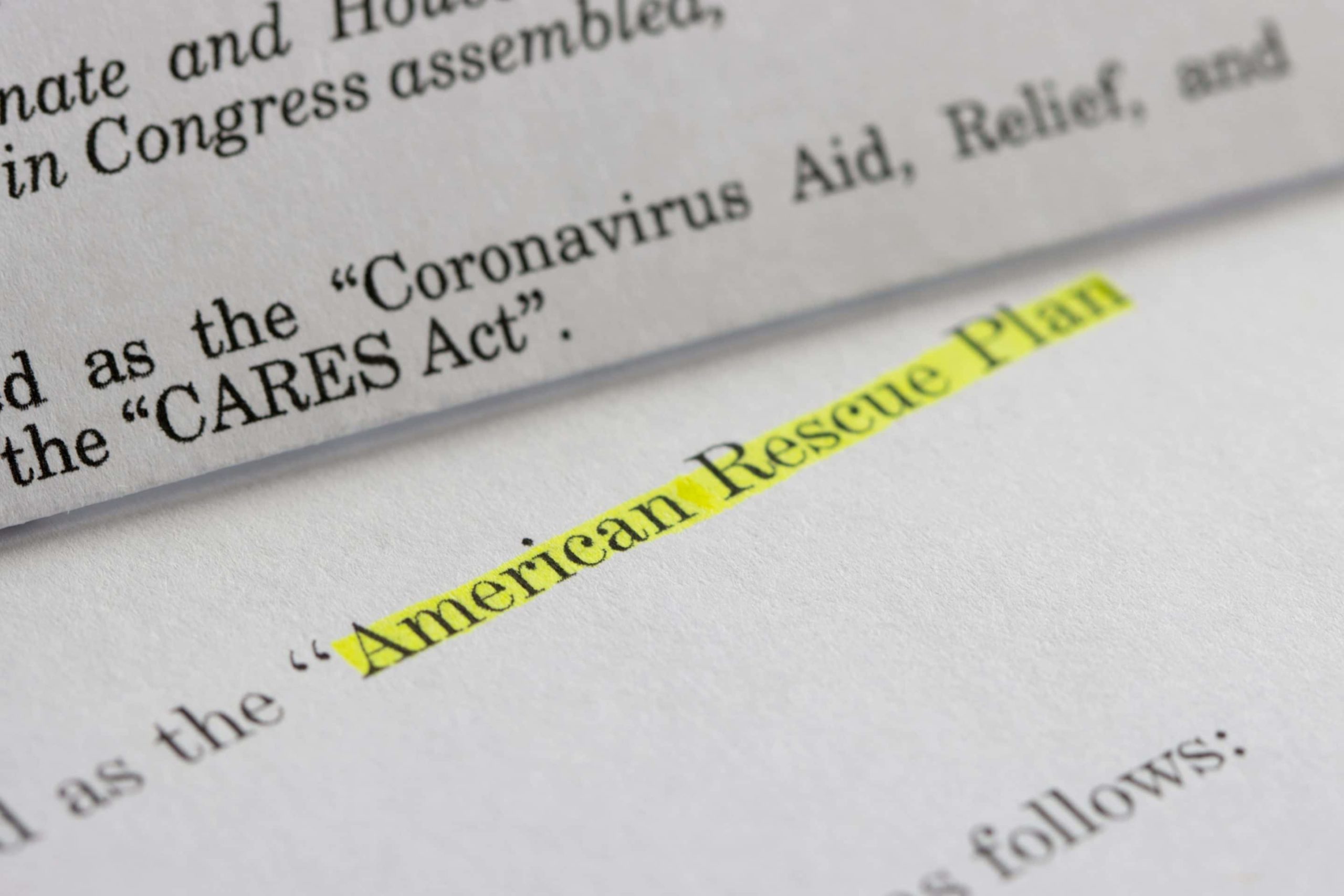
| The American Rescue Plan Act of 2021 is the latest $1.9 trillion coronavirus relief package President Biden signed into law on Wednesday, March 11, 2021 that is designed to continue to facilitate recovery from the economic and health effects of the ongoing pandemic. This Act follows the Coronavirus Aid, Relief, and Economic Security (CARES) Act of 2020 and the Consolidated Appropriations Act of 2021, extending some aspects of those bills and creating new recovery tactics.
Highlights of the American Rescue Plan Act include:
- Stimulus Checks. Individuals making less than $75,000 and couples making less than $150,000 are eligible for stimulus checks of $1,400. This builds on the $600 stimulus checks in the second stimulus package to reach the $2,000 mark requested previously by former president Donald Trump in December 2020. Dependents of eligible recipients, regardless of age, will also receive this stimulus check. However, an estimated 12 million fewer adults will now qualify for a stimulus payment as compared to previous rounds of the Act. Singles earning $80,000 or more and couples making more than $160,000 will be phased out and will not receive a stimulus check.
- Extended Unemployment Benefits. The Act extends unemployment benefits of $300 a week through September 6, 2021. Additionally, the first $10,200 per person in unemployment insurance received in 2020 will be non-taxable for households with incomes under $150,000. This is retroactive for 2020, which may put a delay on filing returns. The Act also provides a 100% subsidy of COBRA health insurance premiums, so unemployed workers can remain on their employer healthcare plans through September.
- Student Loans. Student loan forgiveness passed between December 31, 2020 and January 1, 2026 will be tax-free.
- Child Tax Credit. For each child ages 6 to 17, Americans will receive a $3,000 a year tax credit. For children under 6, that number jumps to $3,600 a year. This is a major expansion on the existing credit, which provides $2,000 a year for children from birth to age 16. The $3,000 credit for parents of dependents aged 6 to 17 will be phased out for individuals earning $95,000 and couples earning $170,000. Families that are not eligible for the new $3,000 credit due to earning higher adjusted gross incomes will still be able to claim the $2,000 credit per dependent. This is available to individuals earning up to $200,000 and couples earning $400,000 who joint file.
- Aid to State and Local Governments. $350 billion a year has been designated for states and local governments. These funds are meant to help replace lost tax revenue due to the pandemic.
- Pandemic Response. $50 billion has been allocated for additional COVID-19 testing and contact tracing and increase the size of the public health workforce. $16 billion has been designated to help fund vaccine distribution and supply chains and $14 billion has been set aside to speed up the distribution and administration of COVID-19 vaccines across the United States.
- Help for Businesses. Pandemic assistance grants totaling $25 billion have been allocated to help businesses cover payroll, rent, utilities and other expenses. The Paycheck Protection Program will receive an additional $7.25 billion. PPP can only apply until March 31, 2021, unless the date is extended. More nonprofits will now be allowed to apply for forgivable loans to help cover expenses.
- Food Aid. $510 million will be used to provide overnight shelter, meals, one month’s rent payments, mortgage assistance and one month’s utility payments under the FEMA Emergency Food and Shelter Program. Emergency nutritional assistance has been extended for food-stamp recipients. This includes a 15% increase in benefits that will continue through September 2021. $5 billion has been placed in the Pandemic-EBT program that provides school-aged children with emergency nutrition benefits.
|